


Transition Tips in ASL

Rosa Lee Timm presents a summary about the transition rights of special education students and briefly describes the Disability Law Center's on-line transition manual, available at www.dlc-ma.org.
She explains what transition services are, why they are important, how to advocate for them effectively, and how you can ask a school to communicate with you in your native language. She concludes with information about how you can call the Disability Law Center if you have additional questions.
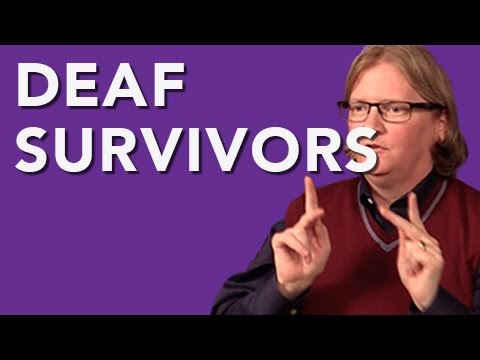
Serving Deaf Survivors of Domestic and Sexual Violence
Published on Jan 28, 2015
Culture, Language, and Access: Key Considerations for Serving Deaf Survivors of Domestic and Sexual Violence
Recent research suggests that Deaf women experience higher rates of sexual and domestic violence than their hearing counterparts, but are often shut off from victim services and supports that are ill-equipped to respond to their unique needs. As a result, they are denied access to services that could help them safely flee from abuse, heal from trauma, and seek justice after they have been harmed. This policy brief offers practical suggestions for expanding and enhancing Deaf survivors’ access to victim services and other supports.
Nancy Smith, the director of Vera’s Center on Victimization and Safety, and Erin Esposito, the executive director of Advocacy Services for Abused Deaf Victims (ASADV), discuss emerging research on the needs of Deaf survivors.
Read Culture, Language, and Access: Key Considerations for Serving Deaf Survivors of Domestic and Sexual Violence at http://www.vera.org/pubs/special/serv...
The Vera Institute of Justice is an independent, nonprofit research and policy organization that combines expertise in research, demonstration projects, and technical assistance to help leaders in government and civil society improve the systems people rely on for justice and safety.
For more information about the Vera Institute of Justice, please visit: http://www.vera.org/